By Sashay & Stow Editorial | Sustainable Fashion Guide 2026 | 14 Min Read
Introduction
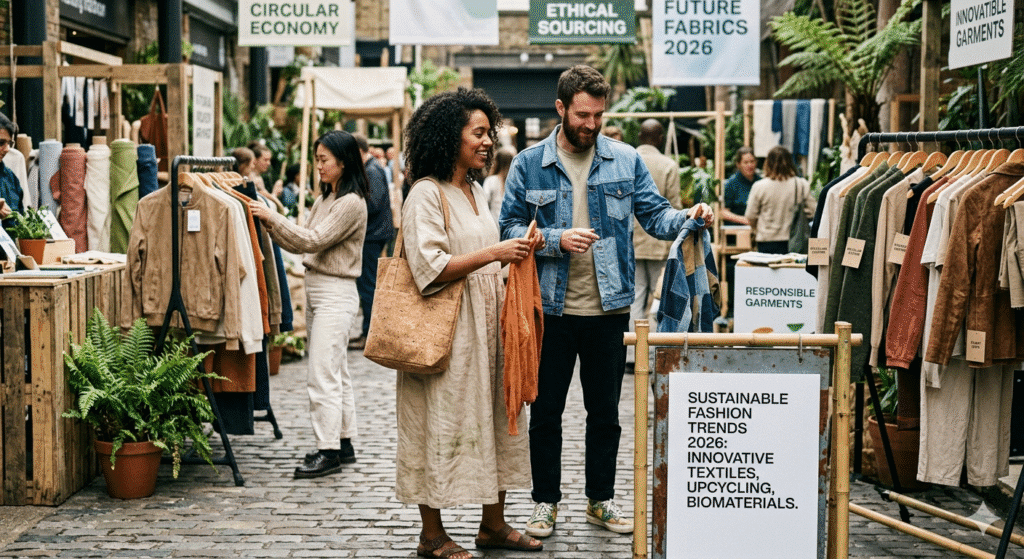
There is a quiet revolution happening in the world of fashion — and unlike the loud, fast-moving trend cycles of the past two decades, this one is deliberate, thoughtful, and genuinely exciting. It is the revolution of sustainable fashion, and in 2026, it has moved decisively from the fringes of the industry into the very centre of how women shop, dress, and think about their wardrobes.
Not so long ago, sustainable fashion conjured images of shapeless hemp dresses in varying shades of beige — worthy in intention but difficult to get genuinely excited about. That image is now thoroughly, gloriously outdated. In 2026, sustainable fashion trends are among the most beautiful, inventive, and genuinely desirable clothing movements happening anywhere in the industry. The most exciting designers are sustainable designers. The most talked-about fabrics are innovative, earth-conscious materials. The most compelling wardrobe philosophy — the one that women across the world are embracing with increasing enthusiasm — is one built around quality, longevity, and conscious intention.
This guide is your comprehensive map to understanding and embracing the most important sustainable fashion trends of 2026 — what they are, why they matter, where to shop for them, and how to incorporate them into your own wardrobe in a way that feels genuinely exciting rather than like a compromise.
My colleague Nadia made a decision at the beginning of 2025 to stop buying fast fashion entirely. She was nervous about it — worried her wardrobe would stagnate, that she’d run out of things to wear, that she’d miss the thrill of a bargain haul. Twelve months later, she told me her wardrobe had never looked better, she’d never felt more confident in her style, and she genuinely couldn’t imagine going back. “I used to buy twenty things and wear five of them,” she said. “Now I buy five things and wear all twenty ways.” That shift in perspective is exactly what sustainable fashion in 2026 is all about.
Why Sustainable Fashion Matters More Than Ever in 2026
Before we explore the specific trends, it’s worth understanding why sustainable fashion has become so urgently important — because the context makes the movement feel less like a lifestyle choice and more like a necessary evolution.
The fashion industry is one of the most resource-intensive and polluting industries on the planet. The global fashion industry is responsible for approximately 10% of annual global carbon emissions — more than all international flights and maritime shipping combined. The industry also consumes enormous quantities of water — producing a single pair of jeans requires approximately 10,000 litres. Meanwhile, less than 1% of clothing is currently recycled into new clothing at the end of its life.
These are significant numbers. But here is the genuinely hopeful part — in 2026, the solutions are arriving at scale. New materials, new business models, new technologies, and a new generation of deeply conscious consumers are collectively transforming what fashion looks like, feels like, and means. And the results are not just environmentally better — they are often more beautiful, more durable, and more meaningful than anything fast fashion ever produced.
According to McKinsey and Company’s State of Fashion 2026 Report, sustainability is now the single most significant driving force reshaping the global fashion industry — with over 67% of consumers considering environmental impact when making purchasing decisions, up from 44% just four years ago. That shift in consumer behaviour is not a trend. It is a permanent transformation in the way the world relates to clothing.
The 12 Most Important Sustainable Fashion Trends of 2026
Trend 1 — Regenerative Fashion: Beyond Sustainability to Restoration
In 2026, the conversation has moved beyond simply being “sustainable” — meaning doing less harm — toward something more ambitious and genuinely exciting: regenerative fashion. Regenerative fashion refers to clothing produced using practices that actively restore and improve ecosystems rather than simply reducing damage to them.
Regenerative agriculture — the farming of cotton, wool, linen, and other natural fibres using practices that rebuild soil health, sequester carbon, and restore biodiversity — is at the heart of this trend. Brands like Patagonia, Eileen Fisher, and Stella McCartney have been pioneering regenerative supply chains for several years, and in 2026 the practice has become mainstream enough that you will find regenerative cotton and wool in collections across a broad range of price points.
What does this mean for you as a consumer? Look for brands that specifically mention Regenerative Organic Certified (ROC) materials or partnerships with regenerative farms in their supply chain transparency reports. Choosing regeneratively produced clothing means your wardrobe is actively contributing to environmental restoration — which is a genuinely remarkable thing.
The shift from sustainable to regenerative is arguably the single most important conceptual evolution in fashion thinking in 2026. Sustainability asks: can we do less harm? Regenerative fashion asks a more ambitious and exciting question: can we actually make things better?
Trend 2 — Innovative Sustainable Fabrics: The Material Revolution
One of the most thrilling aspects of sustainable fashion in 2026 is the extraordinary innovation happening in fabric technology. New materials are arriving that are not only dramatically better for the environment than conventional fabrics but that are also genuinely beautiful, luxurious, and desirable.
The most exciting sustainable fabric innovations of 2026 include:
Mycelium leather — leather made from mushroom roots, pioneered by companies like Bolt Threads and used by brands including Stella McCartney and Hermès. Mycelium leather is genuinely indistinguishable from animal leather in look and feel, fully biodegradable, and produced with a fraction of the environmental impact of conventional leather.
Pineapple leather (Piñatex) — developed by Ananas Anam, Piñatex is made from pineapple leaf fibres — a byproduct of pineapple harvesting that would otherwise go to waste. It has a beautiful texture, is extraordinarily durable, and supports farming communities in tropical regions.
Algae-based fibres — companies like AlgiKnit and Algaeing are producing beautiful textile fibres from seaweed and algae, which grow rapidly without freshwater, fertilisers, or pesticides. The resulting fabrics are soft, biodegradable, and produced with extraordinary efficiency.
Recycled ocean plastic fabrics — ECONYL transforms discarded fishing nets and ocean plastic waste into regenerated nylon that is used by brands like Adidas, Stella McCartney, and Girlfriend Collective to create beautiful activewear, swimwear, and casualwear.
Bamboo and TENCEL lyocell — TENCEL fibres are derived from sustainably harvested wood pulp in a closed-loop production process that recovers and reuses 99% of the solvents used. The result is an extraordinarily soft, breathable, and biodegradable fabric that feels genuinely luxurious against the skin.
Lab-grown silk — Bolt Threads’ Microsilk is a spider-silk protein produced through fermentation rather than conventional silkworm farming, creating a fabric that is stronger than conventional silk, fully biodegradable, and produced without harm to any living creature.
When shopping in 2026, look for these materials specifically on brand websites and product pages. The Textile Exchange is an excellent resource for understanding material certifications and what they actually mean in practice.
Trend 3 — Circular Fashion: The End of Waste
Circular fashion — a system designed so that clothing is kept in use for as long as possible and then safely returned to nature or industry at the end of its life — has become one of the most transformative and widespread movements in 2026.
The Ellen MacArthur Foundation, which has been instrumental in developing the circular economy concept for fashion, defines the goal simply: eliminate waste and keep products and materials in use for as long as possible. In practical terms for women’s fashion in 2026, this looks like several distinct but complementary models:
Take-back programmes — brands including H&M’s Conscious Collection, Levi’s, Patagonia’s Worn Wear, and Eileen Fisher Renew now operate take-back programmes where you can return worn or damaged clothing to be repaired, resold, or responsibly recycled. This model fundamentally changes the relationship between a brand and its customer — from a one-time transaction to an ongoing, responsible partnership.
Clothing rental and subscription services — platforms like Rent the Runway, By Rotation, and HURR allow women to access new styles continuously without purchasing new clothing — dramatically reducing the number of garments needed and extending the useful life of existing pieces.
Resale and recommerce — the secondhand fashion market has exploded in 2026. Platforms like ThredUp, Depop, Vestiaire Collective, The RealReal, and Vinted have collectively made buying and selling pre-loved clothing one of the most popular shopping behaviours among women under 40. The global secondhand clothing market is projected to reach $350 billion by 2028 — more than triple the size of fast fashion.
The beauty of circular fashion is that it makes economic sense as well as environmental sense. Buying better-made pieces that hold their value, and recovering value through resale when you’re done with them, is simply a smarter way to manage a wardrobe.
Trend 4 — Slow Fashion and the Capsule Wardrobe Renaissance
One of the most significant and quietly radical sustainable fashion trends of 2026 is the widespread embrace of slow fashion and the capsule wardrobe philosophy. In direct contrast to the fast fashion model of constant newness, trend cycling, and disposability, slow fashion encourages buying fewer, better-made pieces that you truly love and wear repeatedly over many years.
The capsule wardrobe concept has been thoroughly reimagined for 2026. Today’s capsule wardrobe is not about minimalism for its own sake, but about curating a thoughtful collection of versatile, high-quality pieces that can be mixed and matched to create an enormous variety of outfits. According to fashion experts, the average woman wears only 20% of her wardrobe 80% of the time — and the capsule wardrobe philosophy exists specifically to close that gap.
The investment case is equally compelling — a well-made piece from a brand like Everlane, Cuyana, or Quince will often outlast ten fast fashion equivalents, both in physical durability and in enduring style. When you calculate cost-per-wear rather than purchase price, sustainable slow fashion is frequently the more economical choice.
Trend 5 — Transparent and Ethical Supply Chains
In 2026, supply chain transparency has become a non-negotiable expectation for a growing segment of conscious consumers. Women want to know — and increasingly demand to know — who made their clothes, under what conditions, and at what environmental cost.
The Fashion Revolution movement, which began with its annual Fashion Revolution Week campaign asking brands “Who Made My Clothes?”, has been instrumental in pushing transparency to the forefront of the industry conversation. Their annual Fashion Transparency Index now ranks over 250 of the world’s largest fashion brands on their disclosure of supply chain information, environmental policies, and human rights commitments.
The results are illuminating — and sometimes uncomfortable. Many brands that market themselves as sustainable score surprisingly poorly on actual transparency measures, while some less-marketed brands demonstrate deep, genuine commitment to ethical production.
Brands leading the way on transparency in 2026 include Everlane — which publishes detailed information about every factory it works with, including costs, location, and working conditions — Patagonia, which provides one of the most comprehensive supply chain transparency reports in the industry, and Veja, the French sneaker brand that has built its entire business model on radical transparency about costs, materials, and production methods.
The Good On You app has become an essential tool for conscious consumers in 2026 — it rates over 3,000 fashion brands on their environmental impact, labour standards, and animal welfare policies, making it easier than ever to make informed purchasing decisions on the go.
Trend 6 — Upcycling and Artisan Craftsmanship
Upcycling — the creative transformation of existing or waste materials into new, higher-value clothing — has become one of the most exciting and artistically vibrant expressions of sustainable fashion in 2026. Far from looking homemade or makeshift, today’s upcycled fashion is genuinely beautiful, highly sought-after, and commanding premium prices in the market.
Designers like Marine Serre — known for her iconic crescent moon print on upcycled fabrics — Chopova Lowena, and Bethany Williams have brought upcycled fashion to the highest levels of the industry. Their work demonstrates something important: that working with constraints — with what already exists rather than with endless new raw materials — can produce fashion that is more inventive, more meaningful, and more beautiful than conventional design.
For the woman who wants to explore upcycling personally, even simple skills — like adding embroidery to a plain jacket, dyeing a faded dress, or transforming a pair of worn jeans into a skirt — can meaningfully extend the life of pieces in your wardrobe while adding genuine creativity and personal expression. This is craft as sustainability, and it is one of the most personally rewarding expressions of conscious fashion available to any woman.
Trend 7 — Natural and Plant-Based Dyes
The conversation about sustainable fashion has increasingly expanded beyond fabric and production to include the dyeing and finishing processes that give clothing its colour. Conventional textile dyeing is one of the most water-intensive and chemically polluting steps in clothing production — the World Bank estimates that textile dyeing is responsible for approximately 20% of global water pollution.
In response, natural and plant-based dyes have experienced a significant renaissance in 2026. Brands like Botanical Inks, Studio Nicholson, and The New Denim Project are leading the way in using dyes derived from plants, minerals, and food waste to create beautifully coloured clothing with dramatically reduced environmental impact.
Natural dye colours tend to have a beautifully organic, slightly imperfect quality — earthy terracotta, soft indigo, sage green, warm turmeric yellow, dusty rose — that feels distinctly of the moment and deeply appealing to the aesthetic sensibility of 2026. There is a warmth and depth to naturally dyed clothing that synthetic processes simply cannot replicate, and increasingly women are seeking out that quality with genuine intention.
Trend 8 — Vintage and Secondhand Fashion Goes Mainstream
Perhaps the most democratically accessible sustainable fashion trend of 2026 is the complete mainstream acceptance — and active celebration — of vintage and secondhand clothing. What was once considered the domain of dedicated thrift shoppers and vintage enthusiasts has become one of the most universally embraced shopping behaviours among women of all ages, incomes, and style sensibilities.
The numbers tell a compelling story. Recent research found that 52% of consumers bought secondhand clothing in 2024 — up from 35% in 2020. The average woman in her thirties now sources a meaningful portion of her wardrobe from secondhand channels, whether that’s online resale platforms, charity shops, vintage markets, or clothing swaps.
The best platforms for secondhand fashion shopping in 2026 include Vestiaire Collective for luxury and designer resale, The RealReal for authenticated luxury consignment, Depop for creative and vintage styles, Vinted for everyday peer-to-peer resale, and ThredUp for a broad range of affordable everyday clothing.
What makes secondhand fashion so compelling in 2026 is not just its sustainability credentials — it is the genuine thrill of the find. A beautiful vintage piece with its own history, personality, and provenance is something a fast fashion garment can never replicate. Secondhand shopping is, at its best, one of the most creative and personally expressive forms of fashion consumption available.
Trend 9 — Sustainable Activewear and Athleisure
The enormous popularity of activewear and athleisure — which shows no signs of slowing in 2026 — has driven significant innovation in sustainable sportswear. Women increasingly want their yoga leggings, running gear, and everyday athleisure to reflect the same values as the rest of their conscious wardrobe.
Leading the way in sustainable activewear in 2026:
Girlfriend Collective creates beautiful, size-inclusive activewear from recycled plastic bottles and fishing nets. Their fabrics are certified by OEKO-TEX and the brand offers a take-back recycling programme — meaning your leggings will never end up in a landfill.
Patagonia remains the gold standard of sustainable activewear. Their Worn Wear programme allows customers to return, repair, and resell Patagonia items indefinitely — an extraordinary commitment to product longevity.
Adidas x Parley — the collaboration that transforms ocean plastic waste into beautiful performance sportswear — is a genuine model of circular design in action and has demonstrated that sustainability and high performance are not in conflict.
Organic Basics creates beautiful, minimal activewear and basics from certified organic and recycled materials, with exceptional attention to both aesthetics and environmental responsibility.
The activewear category is important because it represents one of the fastest-growing segments of women’s fashion — and the choices made within it have significant aggregate environmental impact. Choosing sustainable activewear is not a small decision.
Trend 10 — Sustainable Luxury: High Fashion Gets Serious About Ethics
For a long time, luxury fashion positioned itself as exempt from sustainability conversations — the argument being that high price and high quality automatically implied responsible production. In 2026, that argument has been thoroughly and finally dismantled. Sustainable luxury fashion is now one of the most dynamic and genuinely impressive areas of the industry.
Luxury houses making genuine, meaningful commitments to sustainability in 2026 include Stella McCartney — the long-standing pioneer of sustainable luxury, whose brand uses no leather, no fur, and increasingly innovative sustainable materials in every collection — Chloé, which became the first luxury fashion house to achieve B Corp certification, Gucci through its Equilibrium programme, and Gabriela Hearst, whose zero-waste design philosophy produces some of the most exquisitely beautiful clothing in the industry.
The Positive Luxury platform and their Butterfly Mark certification is awarded only to brands that meet rigorous standards across environmental, social, and governance criteria — and it represents one of the most reliable signals of genuine luxury sustainability commitment available to consumers in 2026.
What is most significant about the luxury sustainable fashion movement is its cultural signal. When Chloé becomes B Corp certified and Stella McCartney leads the industry on material innovation, it tells the entire fashion ecosystem — from design schools to factories to consumers — that sustainability and desirability are not opposites. They are, in fact, the same thing.
Trend 11 — Fashion Technology and AI-Driven Sustainability
One of the most fascinating sustainable fashion trends of 2026 is the growing role of technology in enabling more sustainable fashion choices. Artificial intelligence, blockchain, and innovative digital tools are being deployed across the fashion industry to reduce waste, improve transparency, and help consumers make better choices.
AI-powered personal styling platforms — which help women make the most of existing wardrobes rather than purchasing new pieces — have grown dramatically in popularity. Apps like Whering and Save Your Wardrobe use AI to help women catalogue their existing clothes, create new outfit combinations, and identify genuine gaps before buying anything new. The result is less impulse buying, more intentional purchasing, and a significantly more used wardrobe.
Blockchain-based supply chain tracking is enabling brands to provide consumers with unprecedented levels of supply chain transparency — allowing shoppers to trace the journey of a specific garment from raw material to finished product by scanning a QR code on the label. This technology makes greenwashing significantly harder and genuine transparency significantly more accessible.
3D garment design and digital sampling — which allows designers to create and test clothing digitally before producing physical samples — is dramatically reducing the waste associated with the design and sampling process. The fashion industry’s traditional sampling process is extraordinarily wasteful, and digital design technology is changing that at scale.
Trend 12 — Community, Clothing Swaps, and Fashion Libraries
Perhaps the most human and community-oriented sustainable fashion trend of 2026 is the explosion of clothing swaps, fashion libraries, and community-based clothing sharing initiatives. These movements are built on a beautifully simple insight — most women have clothes they no longer wear that someone else would love, and vice versa.
Clothing swaps — events where participants bring unwanted clothing to exchange with others — have grown from informal social gatherings into organised community events, corporate team-building activities, and even retail-brand initiatives. They are free, social, sustainable, and genuinely exciting — a rare combination in any area of life, and particularly in fashion.
Fashion libraries — physical spaces where members can borrow clothing for specific occasions rather than purchasing it — are now operating in cities across Europe, North America, and Australia. The library model applied to clothing is one of the most elegant and logical solutions to fashion overconsumption available — and it is growing rapidly.
What unites clothing swaps and fashion libraries is a shift in how women think about ownership. In 2026, access is increasingly valued over ownership — and that shift in perspective has profound implications for how the fashion industry operates and how individual women relate to their wardrobes.
How to Build a Sustainable Wardrobe in 2026 — Practical Steps
Understanding the trends is one thing. Putting them into practice is another. Here is a practical, step-by-step approach to building a more sustainable wardrobe:
Step 1 — Audit What You Already Own
Before buying anything new, spend time with the wardrobe you already have. Use an app like Whering or Save Your Wardrobe to catalogue your existing pieces and identify what you actually wear regularly versus what is simply taking up space. Understanding your existing wardrobe is the essential foundation of any sustainable approach to fashion. Most women, when they do this honestly, discover they already own more than enough.
Step 2 — Adopt the 30 Wears Rule
Before purchasing any new piece of clothing, ask yourself honestly: will I wear this at least 30 times? This simple question — popularised by sustainable fashion activist Livia Firth and the #30Wears campaign — is one of the most effective filters for reducing impulse purchases and ensuring that every piece you buy earns its place in your wardrobe. It is a deceptively simple test, and it works.
Step 3 — Explore Secondhand First
Before buying anything new, check secondhand platforms first. ThredUp, Depop, Vestiaire Collective, and Vinted are all excellent starting points. Making secondhand your first port of call for new additions to your wardrobe is one of the single most impactful changes you can make as a fashion consumer — both environmentally and financially.
Step 4 — Research Brands Before Buying
Use resources like the Good On You app and the Fashion Revolution Transparency Index to research the sustainability credentials of brands before spending money with them. Look for third-party certifications like GOTS (Global Organic Textile Standard), Fair Trade, B Corp, and OEKO-TEX as indicators of genuine commitment rather than greenwashing. These certifications are not easy to achieve — they represent real, verified commitment to ethical and environmental standards.
Step 5 — Care for Your Clothes Properly
One of the most powerful sustainable fashion practices requires no shopping at all — simply taking better care of the clothes you already own. Washing clothes at lower temperatures, line-drying instead of tumble-drying, following care label instructions carefully, and learning basic repair skills like sewing on a button or darning a small hole can dramatically extend the life of your wardrobe. According to textile care experts, washing at 30 degrees rather than 40 degrees reduces energy consumption by approximately 40% per wash cycle.
Step 6 — Invest in Quality Over Quantity
Shift your spending from many cheap pieces to fewer, better-made ones. Brands like Everlane, Cuyana, Quince, Able, and Reformation offer beautiful, well-made clothing at reasonable price points, with strong commitments to ethical production and environmental responsibility. The initial investment may be higher — but the cost-per-wear calculation almost always works in favour of quality.
Step 7 — Extend the Life of Every Piece
When clothes become worn, damaged, or no longer fit your needs, resist the impulse to bin them. Repair where possible — Patagonia’s Worn Wear programme and The Seam are both excellent repair resources. Donate to Oxfam, Salvation Army, or Dress for Success if the item is still wearable. Sell on Depop or Vinted if it has value. And return to brands with take-back programmes like Eileen Fisher Renew and H&M’s garment collection if recycling is the only remaining option. There is always a better destination for unwanted clothing than landfill.
The Best Sustainable Fashion Brands to Shop in 2026
Here is a curated guide to some of the most recommended sustainable fashion brands across different categories and price points:
Everyday Sustainable Basics:
Everlane offers radical transparency about costs and production, creating beautiful and timeless basics at accessible prices. Their commitment to “radical transparency” is genuine and detailed — a meaningful differentiator in an industry full of vague claims.
Quince offers luxury-quality fabrics — cashmere, silk, linen — at genuinely accessible prices through an ethical supply chain that cuts out the traditional wholesale markups. Outstanding value and genuine quality.
Pact produces certified organic cotton basics with Fair Trade certification across its supply chain. A reliable, affordable, and genuinely sustainable everyday basics brand.
Thought Clothing creates beautiful, nature-inspired clothing in sustainable fabrics including bamboo, hemp, and organic cotton. A wonderful everyday sustainable wardrobe brand with a distinctly beautiful aesthetic.
tentree plants ten trees for every item purchased, uses sustainable materials throughout, and produces genuinely beautiful casualwear and activewear.
Mid-Range Sustainable Fashion:
Reformation is one of the most beautiful and genuinely sustainable mainstream fashion brands currently operating. Their detailed environmental impact reporting for every single product — showing water saved, CO2 avoided, and waste reduced — sets the standard for brand transparency.
Able publishes the wages of every employee in its supply chain — a radical and inspiring approach to labour transparency that no other brand has matched. Beautiful clothing and a genuinely meaningful ethical commitment.
Eileen Fisher creates beautiful, timeless, sustainable clothing and has been one of the most committed sustainability pioneers in American fashion for decades. Their Renew programme — which takes back, repairs, and resells worn Eileen Fisher pieces — is a model for circular fashion done right.
Veja has proved that sustainable footwear can be genuinely desirable and commercially successful, demonstrating that transparency, ethical production, and beautiful design are entirely compatible.
People Tree was a pioneer of Fair Trade fashion long before it was fashionable, and remains one of the most reliably ethical and beautiful sustainable fashion brands in the market.
Premium and Luxury Sustainable Fashion:
Stella McCartney remains the luxury sustainable fashion benchmark — no leather, no fur, constant material innovation, and an uncompromising commitment to proving that luxury and ethics are not in conflict.
Chloé became the first luxury brand to achieve B Corp certification — an extraordinary achievement that signals genuine, verified commitment to social and environmental standards at the highest level of fashion.
Gabriela Hearst pursues a zero-waste design philosophy with stunning results, creating some of the most exquisitely beautiful and environmentally responsible luxury clothing in the world.
Cuyana embodies the “fewer, better things” philosophy with beautiful investment pieces and strong ethical commitments across its supply chain.
Sustainable Activewear:
Girlfriend Collective creates recycled, size-inclusive, and genuinely beautiful activewear with a take-back recycling programme.
Patagonia remains the gold standard of sustainable activewear and outdoor clothing, with an unparalleled commitment to product longevity, repairability, and environmental activism.
Organic Basics produces certified organic and recycled material activewear with a minimal, beautiful aesthetic and exceptional attention to environmental detail.
Adidas x Parley continues to transform ocean plastic into performance sportswear, demonstrating at scale that circular design and high performance are entirely compatible.
Beware of Greenwashing: How to Spot the Real Thing
As sustainable fashion has become commercially mainstream, so has greenwashing — the practice of brands making misleading or unsubstantiated environmental claims to appeal to conscious consumers without making genuine changes to their practices.
According to the Guardian’s greenwashing investigation, many of the world’s largest fashion brands are making environmental claims that don’t hold up to independent scrutiny — a finding that underscores the importance of looking beyond marketing language to verified, third-party evidence of genuine sustainability commitment.
Common greenwashing tactics to watch for:
Vague claims — words like “eco-friendly,” “green,” or “sustainable” without specific evidence or third-party verification. These words have no legal definition and can be applied to almost anything.
Irrelevant claims — highlighting one small sustainable initiative such as recycled packaging while ignoring a deeply unsustainable core business model. This is the sustainability equivalent of putting a bandage on a broken bone.
Hidden trade-offs — promoting one aspect of a product such as organic cotton while ignoring other significant impacts including chemical dyes, unethical labour, and carbon-intensive shipping.
False certifications — using invented or meaningless certification logos rather than recognised third-party standards like GOTS, B Corp, Fair Trade, or OEKO-TEX.
Capsule collections as cover — launching a small “sustainable” or “conscious” collection while the vast majority of production remains unchanged. A genuinely sustainable brand integrates sustainability throughout its entire operation, not just in a headline collection.
The best defence against greenwashing is independent verification. Use the Good On You app, the Fashion Revolution Transparency Index, and the Positive Luxury Butterfly Mark to verify brand claims before spending your money.
The Economic Case for Sustainable Fashion
One of the most persistent misconceptions about sustainable fashion is that it is simply more expensive than conventional fashion — a luxury available only to those with significant disposable income. In 2026, this argument has been comprehensively dismantled.
Consider the true cost of fast fashion. A cheap dress purchased for £15 that falls apart after three washes and ends up in landfill is not an economical purchase — it is an expensive one disguised as a bargain. The same £15 spent on a secondhand piece from a quality brand, or the equivalent sum directed toward a well-made sustainable garment that will last five years, is genuinely more economical when calculated on a cost-per-wear basis.
The secondhand market makes sustainable fashion accessible at every price point. You can build an extraordinary, genuinely sustainable wardrobe almost entirely from platforms like Depop, Vinted, and ThredUp — often for less than the price of a fast fashion haul. Clothing swaps are entirely free. And the capsule wardrobe approach — buying less overall, but better — typically reduces total annual clothing spending rather than increasing it.
Sustainable fashion in 2026 is not a luxury. It is, for the financially thoughtful woman, simply the smarter way to shop.
A Final Word
Sustainable fashion in 2026 is not a sacrifice. It is not a compromise. It is not a niche lifestyle choice for a particularly dedicated minority. It is, increasingly, simply the most beautiful, most intelligent, and most rewarding way to approach the clothes you wear.
The brands creating the most exciting clothing in 2026 are largely sustainable brands. The most innovative materials arriving in the industry are sustainable materials. The most compelling wardrobe philosophy — thoughtful, intentional, quality-focused, and deeply personal — is the sustainable philosophy.
And beyond the aesthetics and the philosophy, there is something else. There is the genuine satisfaction of knowing that the clothes you wear reflect not just your personal style but your values — your care for the world, for the people who make your clothes, for the ecosystems that provide the raw materials, and for the generations who will inherit the planet.
That is a powerful thing to put on in the morning. And it looks, we think, absolutely extraordinary.
Frequently Asked Questions (FAQs)
Q1. What is sustainable fashion and why does it matter in 2026?
Sustainable fashion refers to clothing that is designed, produced, distributed, and consumed in ways that are environmentally sound and socially responsible. It matters more than ever in 2026 because the fashion industry remains one of the world’s most polluting industries — responsible for approximately 10% of global carbon emissions. At the same time, the solutions available in 2026 — innovative materials, circular business models, secondhand platforms, and transparent supply chains — are more accessible and more beautiful than ever before, making sustainable fashion genuinely achievable for every woman regardless of budget or lifestyle.
Q2. What are the most important sustainable fashion trends in 2026?
The most significant sustainable fashion trends of 2026 include the rise of regenerative fashion and regenerative agriculture, extraordinary innovation in sustainable fabrics like mycelium leather, Piñatex pineapple leather, and ECONYL recycled nylon, the mainstream adoption of circular fashion models including clothing rental and resale, the widespread embrace of slow fashion and capsule wardrobes, growing supply chain transparency, the explosion of vintage and secondhand fashion, sustainable activewear innovation, sustainable luxury fashion, AI-driven wardrobe tools, and the growth of community clothing swaps and fashion libraries. Together these trends represent a comprehensive reimagining of the entire fashion system.
Q3. How do I know if a fashion brand is genuinely sustainable?
The most reliable way to verify a brand’s sustainability credentials is to use independent third-party resources rather than relying solely on the brand’s own marketing claims. The Good On You app rates over 3,000 brands on environmental, labour, and animal welfare standards. The Fashion Revolution Transparency Index ranks major brands on supply chain disclosure. Look for meaningful certifications including GOTS, Fair Trade, B Corp, and OEKO-TEX. Be wary of vague claims and look for specific, verifiable evidence of genuine commitment. According to the Guardian’s greenwashing investigation, approximately 60% of green claims made by fashion brands cannot be substantiated — making independent verification genuinely essential.
Q4. What are the best secondhand fashion platforms in 2026?
The best secondhand fashion platforms in 2026 include Vestiaire Collective for luxury and designer resale, The RealReal for authenticated luxury consignment, Depop for creative and vintage styles, Vinted for everyday peer-to-peer resale, ThredUp for a broad range of affordable secondhand clothing, and ASOS Marketplace for curated vintage and independent boutique pieces. Making secondhand your first consideration for new wardrobe additions is one of the single most impactful steps any fashion consumer can take — both environmentally and financially.
Q5. What are the most exciting sustainable fabric innovations in 2026?
The most exciting sustainable fabric innovations of 2026 include mycelium leather made from mushroom roots, which is fully biodegradable and indistinguishable from animal leather; Piñatex pineapple leaf leather, which transforms agricultural waste into beautiful textile material; ECONYL regenerated nylon made from ocean plastic and discarded fishing nets; TENCEL lyocell from sustainably harvested wood pulp; algae-based fibres from companies like AlgiKnit; and lab-grown spider-silk protein from Bolt Threads. These materials represent the most exciting frontier in fashion — proving that environmental responsibility and genuine luxury are not only compatible but, in 2026, increasingly inseparable. For the most comprehensive overview of sustainable material certifications and innovations, Textile Exchange’s annual materials market report is the definitive industry resource.
Q6. What is greenwashing and how do I avoid it in 2026?
Greenwashing is the practice of brands making misleading or unsubstantiated environmental claims to appear more sustainable than they actually are. To avoid greenwashing, look for specific, verifiable claims rather than vague language like “eco-friendly” or “sustainable.” Use the Good On You app and the Fashion Revolution Transparency Index to verify brand claims independently. Look for recognised third-party certifications — GOTS, B Corp, Fair Trade, OEKO-TEX — rather than invented or unverifiable logos. Be particularly alert to brands that launch small “conscious” capsule collections while the vast majority of their production remains unchanged. Genuine sustainability is integrated throughout a brand’s entire operation, not isolated in a headline collection.
Q7. What is a capsule wardrobe and how do I build one sustainably?
A capsule wardrobe is a curated collection of versatile, high-quality pieces that can be mixed and matched to create a wide variety of outfits. Building one sustainably means starting with an honest audit of what you already own, identifying genuine gaps rather than perceived ones, shopping secondhand first via platforms like ThredUp and Depop, and then investing in well-made new pieces from ethical brands like Everlane, Cuyana, or Quince only for items that genuinely complete your wardrobe. The capsule wardrobe philosophy is not about restriction — it is about intentionality. And intentionality, in fashion as in life, tends to produce both better results and greater satisfaction.
Q8. What is regenerative fashion and why is it important?
Regenerative fashion goes beyond sustainability — which focuses on doing less harm — to actively restore and improve ecosystems through the way clothing is produced. It involves sourcing raw materials from farms using regenerative agricultural practices that rebuild soil health, sequester carbon, and restore biodiversity. Brands like Patagonia and Eileen Fisher are leading this movement, and in 2026 it has become one of the most important and widely discussed concepts in sustainable fashion. The distinction matters because it represents a fundamentally different ambition — not simply reducing the negative impact of fashion, but transforming fashion into a force for genuine environmental restoration.
Q9. How does sustainable fashion compare in price to fast fashion?
Sustainable fashion pieces typically carry a higher upfront price than fast fashion equivalents — but the comparison is misleading when you account for cost-per-wear. A well-made sustainable garment that lasts five or more years and is worn regularly will almost always have a lower cost-per-wear than a cheap fast fashion piece that loses its shape or wears out within months. Additionally, building a wardrobe around secondhand shopping, clothing rental, and clothing swaps means sustainable fashion can be genuinely accessible at every budget level. According to McKinsey and Company’s State of Fashion 2026 Report, the average cost-per-wear of sustainable garments is now lower than that of fast fashion equivalents when tracked over a three-year period — a finding that fundamentally changes the economics of the sustainability conversation.
Q10. What simple steps can I take today to make my fashion choices more sustainable?
The most impactful simple steps you can take immediately include checking the Good On You app before buying from any brand you don’t already know well; exploring ThredUp or Depop before purchasing anything new; applying the 30 Wears rule to every potential purchase by asking honestly whether you’ll wear it at least 30 times; washing clothes at lower temperatures to reduce energy consumption and fabric degradation; learning one basic clothing repair skill this month; donating unwanted clothing to a charity rather than sending it to landfill; and using an AI wardrobe app like Whering to make the most of the clothes you already own. None of these steps requires significant money or time — they require only a shift in perspective. And that shift, multiplied across millions of women’s wardrobes, is precisely how the fashion industry changes. For a comprehensive overview of what that industry-wide change looks like, the Ellen MacArthur Foundation’s fashion and the circular economy report is the most authoritative and inspiring resource available.
Published by Sashay & Stow — Women’s Fashion, Style & Confidence | © 2026 All Rights Reserved