
- Introduction
- Why Dress Shape Matters More Than Size
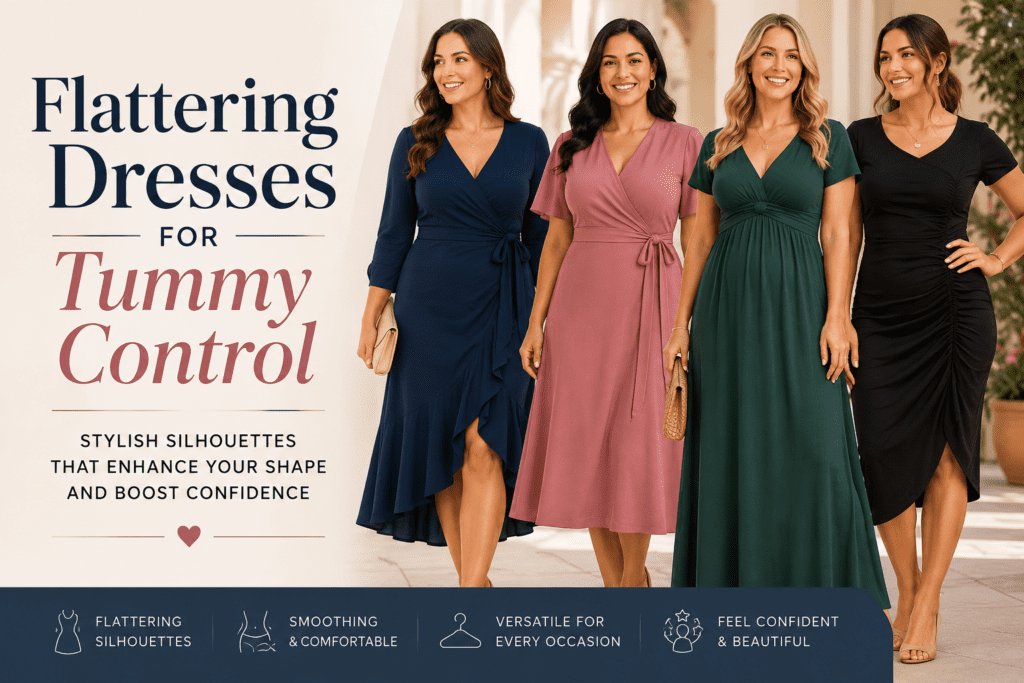
- Wrap Dresses Remain the Gold Standard
- A-Line Dresses Create Effortless Balance
- Empire Waist Dresses Offer Soft Structure
- Ruched Dresses Add Strategic Detail
- Fabric Choice Can Be Just as Important as Silhouette
- Necklines Can Shift Visual Balance
- The Importance of Comfort and Confidence
- Why Personal Style Matters More Than Any Rule
- Conclusion
- FAQs
Introduction
Every woman has experienced that moment.
You find a beautiful dress, love the color, admire the fabric, and imagine all the places you could wear it. Then you try it on and something feels off. The issue is rarely your body. More often, it’s the silhouette.
For women who prefer a little more coverage or support around the midsection, choosing the right dress shape can make a remarkable difference. The goal is not to hide the body or chase unrealistic ideals. Rather, it is about selecting styles that create balance, enhance comfort, and allow confidence to take center stage.
Modern fashion has moved away from restrictive notions of dressing for a specific body type. Today’s approach emphasizes fit, proportion, and personal style. The most flattering dresses for tummy control are not designed to conceal who you are. They are designed to work with your natural shape while creating a smooth and elegant silhouette.
In 2026, designers continue embracing comfort-driven fashion that prioritizes movement, versatility, and confidence. Women increasingly favor wearable styles that combine sophistication with real-world practicality.
The best dress is not the one that changes your body.
It is the one that allows you to forget about your body and enjoy the occasion.
Why Dress Shape Matters More Than Size
Many women assume that sizing is the key factor in achieving a flattering fit.
In reality, silhouette often matters far more than the number printed on the tag. A well-designed dress can create visual balance, define the waist, and skim over the midsection in a way that feels comfortable and natural.
Fashion experts frequently emphasize proportion as one of the most important elements of styling. Certain dress shapes direct attention toward the shoulders, neckline, waist, or legs while allowing fabric to move gracefully across the torso.
This approach creates harmony throughout the outfit.
When clothing works with the body’s natural lines, confidence tends to follow naturally.
Wrap Dresses Remain the Gold Standard
Few dress styles have earned as much universal praise as the wrap dress.
Originally popularized by legendary designer Diane von Furstenberg, the wrap dress remains one of the most flattering silhouettes available. Its appeal lies in its ability to define the waist without feeling restrictive.
The adjustable wrap construction creates shape through the torso while allowing the fabric to drape softly across the midsection. Most wrap dresses also feature V-necklines that draw the eye upward, helping create a balanced overall silhouette.
Because the fit can be adjusted, wrap dresses often provide a level of comfort that many structured styles cannot match.
Their versatility makes them suitable for work, casual outings, weddings, vacations, and special occasions alike.
A-Line Dresses Create Effortless Balance
A-line dresses continue to be among the most recommended styles for women seeking tummy-friendly silhouettes.
The design is simple but remarkably effective. Fitted gently through the upper body before gradually widening toward the hem, the A-line shape creates movement without clinging to the midsection.
This silhouette naturally skims over the stomach and hips while maintaining structure and elegance. The result feels polished rather than oversized.
One reason A-line dresses have remained fashionable for decades is their versatility. They work across seasons, complement a wide range of body shapes, and adapt easily to both casual and formal settings.
Timeless silhouettes rarely become trends because they never truly go out of style.
Empire Waist Dresses Offer Soft Structure
Empire waist dresses have been flattering women for centuries.
Characterized by a raised waistline positioned just below the bust, this silhouette allows the fabric to flow gently over the torso and midsection. Because the narrowest part of the body becomes the focal point, the dress naturally creates an elongating effect.
Fashion historians frequently reference empire silhouettes as examples of enduring design because they emphasize comfort while maintaining elegance. The Metropolitan Museum of Art’s Costume Institute showcases numerous examples of how empire-waist designs have remained relevant throughout fashion history.
Today, the style continues to be a favorite for women seeking comfort without sacrificing sophistication.
Ruched Dresses Add Strategic Detail
One of the most effective design elements for tummy control is ruching.
Ruching refers to gathered fabric that creates texture across portions of a garment. When placed thoughtfully around the midsection, it helps soften visual lines while adding dimension and movement.
Unlike heavily structured shapewear-inspired designs, ruched dresses create a more natural effect. The texture breaks up smooth fabric surfaces, making the silhouette appear balanced and flattering without feeling engineered.
Many modern designers incorporate subtle ruching into dresses specifically because it enhances comfort while supporting a confident fit.
The effect is often surprisingly transformative.
Fabric Choice Can Be Just as Important as Silhouette
Even the most flattering dress shape can feel less effective if the fabric works against it.
Materials that are excessively clingy may emphasize areas some women prefer to soften, while overly stiff fabrics can create unnecessary bulk. The most flattering dresses often use fabrics with gentle drape that move naturally with the body.
Crepe, jersey knits, chiffon overlays, soft cotton blends, and lightweight woven fabrics tend to perform particularly well because they create fluidity without losing structure.
Fabric is often the hidden factor that separates a good dress from a great one.
Necklines Can Shift Visual Balance
Many women focus entirely on the waist and midsection when selecting dresses while overlooking the importance of necklines.
A well-chosen neckline can draw attention upward and create a beautifully balanced silhouette. V-necks, square necklines, scoop necks, and sweetheart necklines are especially effective because they frame the face and upper body.
This subtle shift in visual emphasis contributes to an overall sense of proportion.
The most flattering outfits rarely rely on a single design feature. They combine multiple elements that work together harmoniously.
The Importance of Comfort and Confidence
Perhaps the most significant shift in modern fashion is the growing recognition that confidence and comfort are inseparable.
Women increasingly reject the idea that flattering clothing must be restrictive. Instead, they seek garments that support movement, feel comfortable throughout the day, and enhance natural confidence.
This evolution has led to better design, more inclusive sizing, and a wider range of silhouettes that celebrate different body shapes.
Fashion works best when it supports confidence rather than undermines it.
Why Personal Style Matters More Than Any Rule
While certain dress silhouettes are widely recognized as tummy-friendly, no styling guideline should override personal preference.
Some women feel most confident in wrap dresses. Others prefer structured A-line silhouettes, flowing maxi dresses, or modern fit-and-flare designs. The best choice is ultimately the one that makes you feel comfortable and authentic.
Fashion should never be about correcting the body.
It should be about expressing personality, enhancing confidence, and making everyday life feel a little more enjoyable.
When a dress fits well and feels good to wear, that confidence becomes the most flattering feature of all.
Conclusion
The most flattering dresses for tummy control combine thoughtful design, comfortable fabrics, and confidence-enhancing silhouettes. Wrap dresses, A-line styles, empire waist designs, and subtly ruched dresses remain popular because they create balance while allowing women to move comfortably through daily life.
The goal is not to hide the body.
It is to choose clothing that supports the way you want to feel.
Fashion becomes far more powerful when it shifts from focusing on perceived imperfections to celebrating personal style. A well-chosen dress can provide comfort, elegance, and confidence all at once.
And confidence never goes out of fashion.
FAQs
What dress style is most flattering for tummy control?
Wrap dresses and A-line dresses are among the most flattering options because they define the waist while skimming comfortably over the midsection.
Are empire waist dresses good for tummy control?
Yes. Empire waist dresses draw attention upward and allow fabric to flow naturally over the stomach area, creating a soft and elegant silhouette.
Does ruching help make a dress more flattering?
Yes. Strategic ruching adds texture and visual dimension, which can help soften the appearance of the midsection while maintaining comfort.
What fabrics work best for tummy-friendly dresses?
Crepe, jersey, chiffon overlays, cotton blends, and other softly draping fabrics tend to create the most flattering effect.
Should women size up for tummy control?
Not necessarily. Choosing the correct size and a flattering silhouette is usually more effective than sizing up, which can sometimes create a less polished fit.
Can fitted dresses still be flattering for women with a tummy?
Absolutely. Dresses with thoughtful tailoring, strategic ruching, supportive fabrics, and balanced proportions can be both fitted and flattering.