Choosing what to wear to a job interview can feel overwhelming, but it doesn’t have to be. Your outfit isn’t about wearing expensive brands or following the latest trends—it’s about presenting yourself as confident, professional, and prepared. A well-planned outfit allows employers to focus on your skills and experience while showing that you understand the company’s culture and take the opportunity seriously.
What to Wear to an Interview, first question comes in mind at the interview day. The best interview attire balances professionalism with personal style. Whether you’re interviewing for a corporate position, a creative role, or a tech startup, your clothing should fit well, feel comfortable, and reflect the expectations of the workplace. When you feel confident in your appearance, you’re more likely to communicate effectively and make a strong first impression.
- Why Your Interview Outfit Matters
- Match Your Outfit to the Company's Culture
- Understanding Interview Dress Codes
- Interview Outfit Ideas
- Interview Outfits for Every Season
- Choose the Right Shoes
- Accessories That Complete Your Look
- Hair, Makeup, and Grooming Tips
- What to Wear to a Virtual Interview
- Quiet Luxury: A Modern Approach to Interview Dressing
- Build a Capsule Interview Wardrobe
- Common Interview Outfit Mistakes Women Make
- Celebrity-Inspired Professional Style
- Frequently Asked Questions
- Final Thoughts
Why Your Interview Outfit Matters
First impressions are formed within moments, and your clothing plays an important role in shaping them. A polished outfit demonstrates attention to detail, professionalism, and respect for the successful interview process. It also boosts your confidence, helping you maintain better posture, eye contact, and communication throughout the interview.
Rather than trying to impress with fashion, think of your outfit as part of your professional image. Clean, well-tailored clothing supports your qualifications without distracting from them.
Match Your Outfit to the Company’s Culture
Not every interview requires the same level of formality. Research the company’s website, social media, and employee photos to understand its dress code before choosing your outfit.
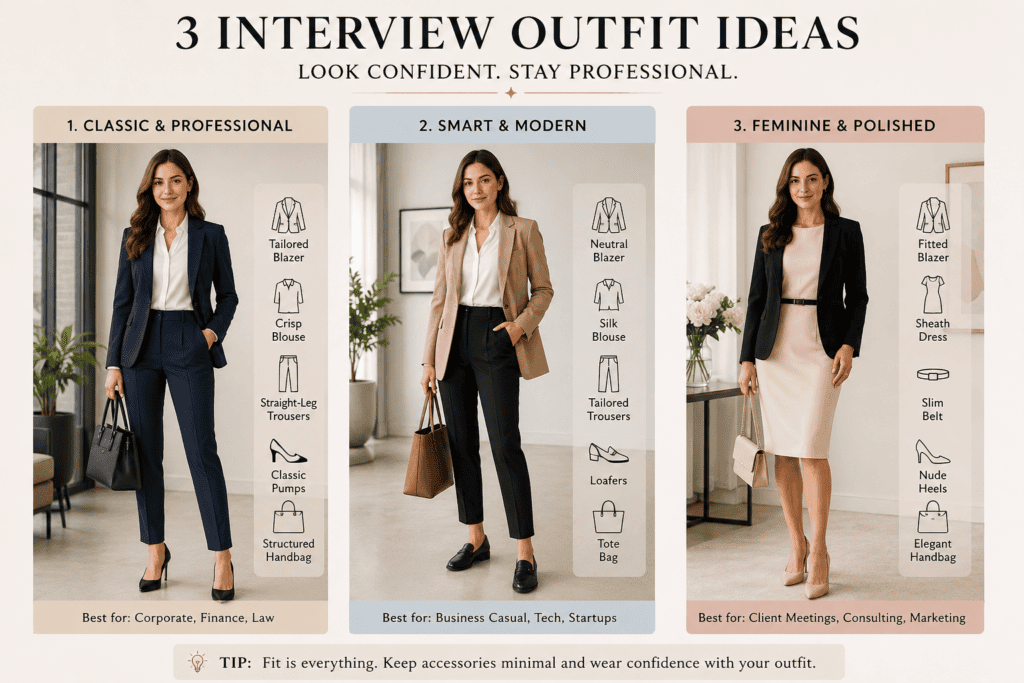
Traditional industries such as finance, law, and consulting usually expect business professional attire, including a tailored suit, blouse, and closed-toe shoes. Technology companies often favor business casual, where tailored trousers, a blouse, and loafers create a polished but approachable look. Creative fields allow more personality through modern tailoring and subtle accessories, while healthcare and education generally call for conservative, practical clothing.
If you’re uncertain, it’s usually safer to dress slightly more formally than too casually.
Understanding Interview Dress Codes
Business professional is the most formal option and typically includes a tailored navy or charcoal suit, a neutral blouse, closed-toe pumps, and understated accessories. This style is ideal for corporate interviews and leadership positions.
Business casual offers more flexibility by combining tailored separates instead of a matching suit. Tailored trousers, a silk blouse, a lightweight blazer, and leather loafers create a professional look suitable for many modern workplaces.
Smart casual is common in startups and creative environments. Elevated basics such as wide-leg trousers, a fitted knit top, and a structured blazer provide a contemporary appearance while maintaining professionalism.
Interview Outfit Ideas
A classic navy pantsuit remains one of the safest choices for interviews because it communicates confidence and professionalism. Pair it with a white blouse, neutral pumps, and a structured handbag for a timeless look.
For business casual interviews, tailored ankle-length trousers, a silk blouse, and a camel or navy blazer create a modern yet polished outfit. Women who prefer dresses can choose a knee-length sheath dress with a tailored blazer and simple accessories for an elegant appearance.
Another stylish option is pairing wide-leg tailored trousers with a fitted blouse for a contemporary silhouette. If you prefer a more minimalist aesthetic, embrace quiet luxury by choosing neutral colors, premium fabrics, and clean tailoring. A cream blouse, charcoal trousers, a camel blazer, and leather loafers create an effortlessly sophisticated interview outfit that reflects confidence without relying on trends.
Interview Outfits for Every Season
Your interview outfit should suit both the weather and the workplace. Choosing the right fabrics and layers helps you stay comfortable while maintaining a polished, professional appearance throughout the day.
Spring Interview Outfits
Spring weather can be unpredictable, so light layers are essential. A tailored blazer over a silk blouse and ankle-length trousers creates a refined look. Soft shades like sage, blush, or powder blue paired with navy or charcoal trousers keep your outfit fresh and professional. Complete the look with loafers or block heels and a lightweight trench coat for rainy days.
Summer Interview Outfits
Summer interviews call for breathable fabrics like cotton, linen blends, or lightweight wool. Pair tailored trousers with a sleeveless blouse and a lightweight blazer, or choose a structured sheath dress in neutral colors. Closed-toe flats, loafers, or pumps keep the outfit office-appropriate. Avoid revealing clothing, flip-flops, or overly casual summer pieces.
Fall Interview Outfits
Autumn is perfect for polished layering. A camel blazer over a cream blouse with charcoal trousers creates a timeless look. Add seasonal colors like burgundy or olive through accessories, and finish with a tailored wool coat and classic loafers, pumps, or sleek ankle boots.
Winter Interview Outfits
In winter, wear a tailored wool coat over your interview outfit and remove it indoors. Layer a fitted turtleneck or long-sleeved blouse beneath a blazer for warmth without bulk. If the weather is wet, commute in practical boots and change into clean pumps or loafers before your interview.
Choose the Right Shoes
Your shoes should complement your outfit while keeping you comfortable. Classic pumps remain a reliable choice, while leather loafers offer a stylish alternative for business casual settings. Ballet flats and block heels provide comfort without sacrificing professionalism, and sleek leather ankle boots work well during colder months. Whatever style you choose, ensure your shoes are clean, polished, and comfortable enough to wear with confidence.
Accessories That Complete Your Look
Accessories should enhance your outfit without becoming the center of attention. A structured leather handbag, simple jewelry, and a classic watch create a polished appearance. A slim belt can define your silhouette, while a lightweight scarf adds elegance in cooler weather. Keep accessories minimal—professional style is often defined by simplicity and thoughtful coordination.
Hair, Makeup, and Grooming Tips
Professional grooming is just as important as your outfit. Choose a neat hairstyle that keeps your hair away from your face, and opt for natural-looking makeup that enhances your features. Keep your nails clean and well maintained, wear only a light fragrance, and make sure your clothes are wrinkle-free. Polished shoes, an organized handbag, and attention to small details complete a professional appearance and help you walk into the interview feeling confident and prepared.
What Not to Wear to an Interview
Dressing professionally means avoiding anything that distracts from your qualifications. Casual items like ripped jeans, hoodies, leggings, graphic T-shirts, and athletic wear are usually inappropriate for interviews. Clothing that is too revealing, wrinkled, or poorly fitted can also leave a negative impression. Choose clean, tailored pieces, polished shoes, minimal accessories, and a light fragrance so your appearance supports your professionalism rather than overshadows it.
What to Wear to a Virtual Interview
Virtual interviews require the same level of professionalism as in-person meetings. Wear a structured blazer and blouse in solid colors that look good on camera, and test your outfit under your lighting beforehand. Even if only your upper body is visible, dress completely to stay in a professional mindset. A tidy background and good lighting help create a polished first impression.
Quiet Luxury: A Modern Approach to Interview Dressing
Quiet luxury focuses on timeless tailoring, quality fabrics, and understated elegance instead of bold logos or trends. Neutral colors like navy, beige, cream, and charcoal create sophisticated interview outfits that remain stylish for years. Investing in a few well-made wardrobe staples not only elevates your professional image but also supports a more sustainable approach to fashion.
Build a Capsule Interview Wardrobe
A capsule wardrobe makes interview dressing simple and versatile. Start with neutral blazers, tailored trousers, classic blouses, a sheath dress, and comfortable shoes that can be mixed and matched. Finish with a structured handbag, understated jewelry, and a classic watch to create multiple polished outfits with just a few essential pieces.
Common Interview Outfit Mistakes Women Make
Common mistakes include overdressing or underdressing, choosing uncomfortable clothing, ignoring the weather, and wearing poorly fitted garments. Preparing your outfit a few days in advance, ensuring everything fits well, and checking that your clothes and shoes are clean and wrinkle-free will help you feel confident and focused on the interview.
Celebrity-Inspired Professional Style
Women like Victoria Beckham, Meghan, Duchess of Sussex, Rosie Huntington-Whiteley, and Amal Clooney demonstrate that timeless tailoring, neutral colors, and exceptional fit create a polished professional image. Rather than copying their outfits, take inspiration from their minimalist, elegant approach to dressing.
Frequently Asked Questions
Can women wear pants to a job interview?
Absolutely. Tailored trousers are one of the most versatile and widely accepted choices for women’s interview attire. In many industries, including finance, technology, healthcare, consulting, and marketing, a well-fitted pair of trousers paired with a blouse and blazer looks every bit as professional as a skirt or dress. Choose classic cuts in neutral colors like navy, charcoal, black, or beige, and ensure they fit comfortably without being too tight or overly loose.
Is it okay to wear a dress to an interview?
Yes, provided the dress is appropriate for a professional setting. A sheath dress, wrap dress, or tailored midi dress in a solid color works exceptionally well. Hemlines should fall around the knee, necklines should remain modest, and fabrics should maintain their shape throughout the day. Adding a structured blazer instantly makes most professional dresses even more interview-ready.
Can I wear jeans to an interview?
In most cases, it’s best to avoid jeans, even if the company has a relaxed dress code. While some startups and creative agencies may permit dark, non-distressed denim in the workplace, interviews call for a more polished version of your everyday style. Tailored trousers or a structured dress send a stronger message that you’ve taken the opportunity seriously.
What shoes should women wear to an interview?
Classic pumps, leather loafers, ballet flats, and block heels are all excellent choices. The most important factors are comfort, cleanliness, and professionalism. Neutral colors such as black, nude, navy, or brown coordinate easily with most interview outfits. If you’ll be walking a long distance, choose shoes you’ve already worn and know are comfortable.
Should I wear black or navy?
Both colors are excellent, but they create slightly different impressions. Black projects authority, sophistication, and formality, making it ideal for corporate environments. Navy feels equally professional while appearing slightly more approachable and modern. If you’re uncertain, navy is often the safest all-around choice because it suits nearly every industry.
Is business casual appropriate for every interview?
Not necessarily. Business casual works well for many technology companies, educational institutions, marketing agencies, and modern offices, but more traditional industries often expect business professional attire. Researching the company’s culture beforehand helps you determine the appropriate level of formality.
What should I wear to a startup interview?
A startup interview usually calls for polished business casual rather than a formal suit. Tailored trousers, a sophisticated blouse, and loafers or block heels create an outfit that feels relaxed yet professional. Adding a blazer gives you flexibility—you can keep it on if the office appears more formal or remove it if the environment is particularly casual.
What should I wear to a virtual interview?
Dress exactly as you would for an in-person interview, particularly from the waist up. A blazer and blouse create a sharp, professional appearance on camera. Solid colors generally work better than busy prints, and good lighting helps you look confident and engaged. Even if your lower half isn’t visible, dressing completely can boost your confidence and put you in a professional mindset.
Are open-toe shoes acceptable for an interview?
Opinions vary by industry, but closed-toe shoes remain the safest option. In conservative workplaces such as law firms, banks, or government offices, closed-toe pumps or loafers are generally expected. In more creative industries, elegant open-toe shoes may be acceptable, but if you’re unsure, it’s always better to choose closed-toe footwear.
How can I look professional if I don’t own a suit?
You don’t need an expensive suit to make a great impression. A well-fitted blazer paired with tailored trousers or a knee-length dress can look just as polished. Focus on quality basics in neutral colors, clean shoes, and simple accessories. Employers notice confidence, preparation, and professionalism far more than designer labels.
Final Thoughts
Choosing what to wear to an interview isn’t about following rigid fashion rules or buying an entirely new wardrobe. It’s about understanding the expectations of the role, respecting the company’s culture, and presenting yourself in a way that allows your qualifications to take center stage.
The strongest interview outfits share a few common qualities. They fit well, feel comfortable, and reflect timeless style rather than short-lived trends. Whether you’re interviewing for a corporate position, a teaching role, a creative agency, or a fast-growing startup, thoughtful tailoring, neutral colors, and polished accessories will always leave a stronger impression than flashy fashion.
Remember that confidence begins long before the interview starts. When you know your outfit is appropriate, comfortable, and professionally styled, you naturally stand taller, communicate more clearly, and focus your attention on showcasing your skills instead of worrying about your appearance.
As workplace fashion continues to evolve, one principle remains unchanged: authenticity matters. The best interview outfit isn’t necessarily the most expensive or the most fashionable. It’s the one that reflects your professionalism, complements your personality, and helps you walk into the room feeling prepared for the opportunity ahead.
Build your wardrobe around timeless essentials like a tailored blazer, well-fitted trousers, elegant blouses, comfortable leather shoes, and a structured handbag. These investment pieces can be mixed and matched for years, serving not only interviews but also presentations, networking events, and important meetings throughout your career.
At the end of the day, employers hire people—not outfits. Your experience, attitude, and potential will always matter most. A polished interview outfit simply helps ensure that your first impression opens the door for everything else you have to offer.