By Sashay & Stow Editorial | Career Style Guide 2026 | 10 Min Read
Introduction
You’ve landed the interview — congratulations! Now comes the second big challenge: figuring out exactly what to wear. Because here’s the truth — your outfit walks into the room before you even say a single word.
Job interviews are nerve-wracking enough without the added stress of standing in front of your wardrobe at 7 AM, holding up two blouses and wondering which one says “hire me immediately.” The good news? Once you understand the logic behind a business casual interview outfit for women, getting dressed for success becomes a whole lot easier — and even enjoyable.
Whether you’re interviewing at a corporate office, a tech startup, a creative agency, or a retail headquarters, this guide covers everything you need to know. From understanding what business casual truly means to building your outfit piece by piece, we’ve got you covered from head to toe — literally.
The truth about interview dressing is that it is not really about fashion at all. It is about communication. Your outfit communicates your professionalism, your self-awareness, your attention to detail, and your understanding of the organisation you’re hoping to join — all before you have spoken a single word. Getting it right is not vanity. It is strategy.
My friend Hira had a dream interview lined up at a mid-sized marketing firm. She spent three days planning her outfit — eventually settling on a full formal black blazer suit because she didn’t want to “risk it.” She got the job, but later found out the hiring manager’s first impression was that she looked “a bit stiff and unapproachable.” A polished blouse and tailored trousers would have shown her personality far better. The right outfit isn’t just about looking good — it’s about communicating who you are.
What Does “Business Casual” Mean for an Interview?
Let’s clear this up right away, because “business casual” is genuinely one of the most misunderstood dress codes out there. It sits comfortably between fully formal business attire — think structured suits and conservative colours — and everyday casual wear — think jeans and trainers.
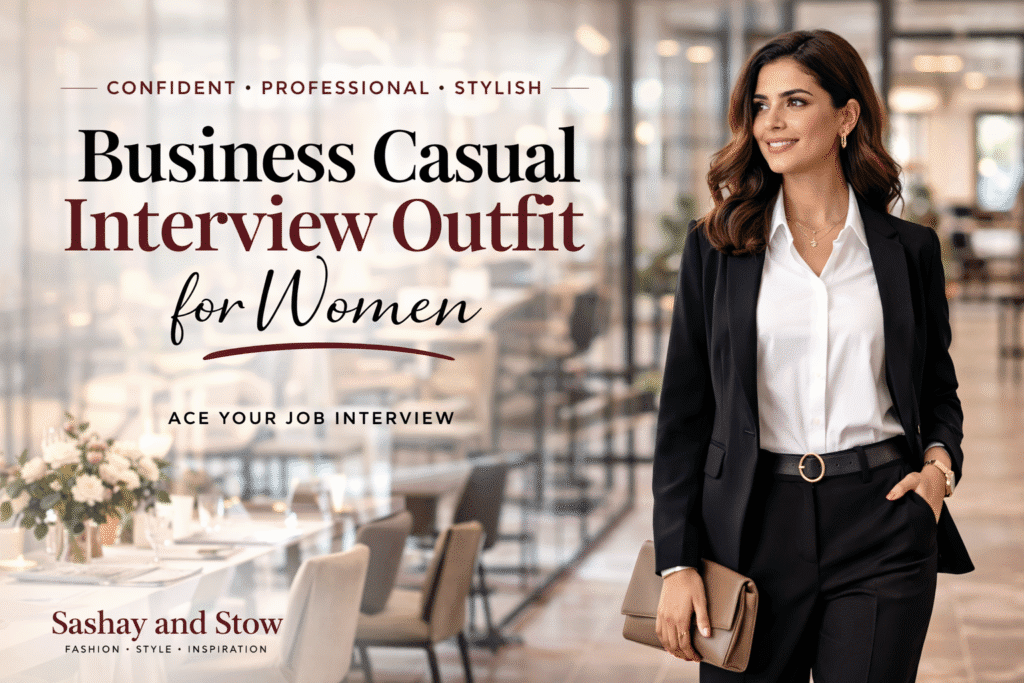
For a business casual interview outfit, the goal is to look professional, polished, and put-together — while still appearing approachable, modern, and genuinely like yourself. Business casual for women typically includes blouses, tailored trousers, blazers, midi skirts, and smart dresses — all in neat, professional fabrics and colours.
The important thing to remember is that an interview is not the same as a regular workday. Even if the company has a relaxed dress code day-to-day, for your interview you should always dress one level above what you think the office norm is. First impressions, after all, only happen once.
According to Indeed’s career advice guide on business casual for women, the most common mistake candidates make is interpreting “business casual” too loosely — wearing outfits that feel casual to them but read as underprepared and unprofessional to hiring managers. Understanding this distinction can be genuinely career-changing.
The Golden Rules for a Business Casual Interview Outfit
Before we jump into the step-by-step guide, here are the principles every woman should keep in mind:
Rule 1 — Research the company culture before choosing your outfit. A law firm, a tech startup, a creative agency, and a healthcare provider all have different expectations. Knowing the culture shapes every single outfit decision you’ll make.
Rule 2 — Always dress one level above the day-to-day norm. The interview is your opportunity to show the company its best possible version of you. That means slightly more polished, slightly more prepared, and slightly more elevated than what employees wear on a regular Tuesday.
Rule 3 — Fit is everything. A well-fitted modest blazer from a high street brand will always look more impressive than an expensive, poorly fitting designer piece. Fit communicates that you pay attention to detail — a quality every employer wants.
Rule 4 — Comfort supports confidence. If you’re spending your interview tugging at a hem, adjusting a collar, or wincing with every step, your discomfort will show. Wear something you feel genuinely comfortable and confident in — your performance in the interview depends on it.
Rule 5 — Prepare everything the night before. Iron your outfit. Check your shoes. Pack your bag. Lay everything out. Interview mornings are stressful enough without adding a wardrobe crisis to the equation.
Step-by-Step Guide to Building Your Business Casual Interview Outfit
Let’s break it all down into simple, manageable steps:
Step 1 — Research the Company Culture First
Before you pick a single clothing item, spend ten minutes researching the company. Look at their website, their LinkedIn page, and their social media. How are employees dressed in photos? What is the office aesthetic? A law firm will expect something more conservative than a digital marketing startup. Knowing the culture shapes every outfit decision you’ll make afterward — and it also demonstrates exactly the kind of thoughtful preparation that impresses hiring managers.
Step 2 — Choose Your Base Piece
Your base is the foundation of your entire look. For a business casual interview outfit, great base options include a tailored blazer with matching trousers, a smart midi dress, a pencil skirt with a neat blouse, or a well-fitted pantsuit. Stick to clean lines, solid colours, or subtle patterns. Avoid anything distracting, overly trendy, or tonally too casual. Your base piece should make you feel authoritative, competent, and genuinely like the best professional version of yourself.
Step 3 — Select the Right Fabric
Fabric communicates professionalism before you even speak. For interviews, go for structured crepe, ponte knit, cotton blends, fine wool, or quality polyester blends that hold their shape beautifully throughout a long day. Avoid anything sheer, overly clingy, wrinkle-prone, or casual like denim or jersey. Always check for wrinkles the night before and iron or steam your outfit so it looks pristine when you arrive.
Step 4 — Pick Professional Footwear
Your shoes need to strike the perfect balance between polished and practical. Low to mid-height block heels or classic pointed-toe flats are ideal for interviews. Loafers are also a wonderful business casual option that looks sharp without requiring heels at all. Avoid open-toe sandals, very high stilettos, or overly casual trainers. Make sure your shoes are clean, scuff-free, and thoroughly broken in — never wear brand-new shoes to an interview, as discomfort affects your confidence and concentration.
Step 5 — Keep Accessories Minimal and Intentional
For interviews, less is genuinely more. A simple watch, small stud earrings, or a delicate pendant necklace are all you need. Avoid chunky statement jewellery, loud bangles that jingle when you move, or anything that might distract the interviewer from your words. Your accessories should be noticed as part of an overall polished impression — not noticed on their own. Carry a structured tote bag or a professional leather handbag — it doubles as both a style statement and a practical carrier for your documents, CV copies, and portfolio.
Step 6 — Groom and Style Your Hair Neatly
Your hair is part of your overall professional presentation. For an interview, opt for a neat low bun, a polished ponytail, sleek straight hair, or well-defined natural curls. The goal is to look tidy, prepared, and put-together. Avoid styles that require constant adjustment during the interview — you want your hands free, your posture open, and your focus entirely on the conversation.
Step 7 — Keep Makeup Clean and Polished
For a business casual interview, your makeup should enhance your features rather than distract from them. A fresh, even-toned base, defined brows, a coat of mascara, and a neutral or soft lip colour work perfectly. Avoid heavy contouring, bold eyeshadow, or very dramatic looks that might feel out of place in a professional context. Use a long-wearing formula and a setting spray — interviews are stressful and your makeup should last the duration without requiring touch-ups.
Step 8 — Do a Full Dress Rehearsal the Night Before
This step is non-negotiable. Put your entire outfit on the evening before — shoes, accessories, and bag included — and do a complete mirror check. Sit down, stand up, raise your arms, turn around. Make sure nothing pulls, rides up, gaps, or wrinkles excessively. This also gives you time to switch something out calmly if needed, rather than in a panic on the morning of your interview. Calm, prepared mornings produce better interviews.
💡 Pro Tip: Lay your entire interview outfit out the night before — every single piece including jewellery, shoes, and bag. Interview mornings are stressful enough. The last thing you need is to be searching for a matching shoe or a safety pin at 8 AM.
Best Business Casual Interview Outfit Ideas for Women
Now for the fun part. Here are some of the most effective and stylish business casual interview outfit ideas for women that strike the perfect balance between professional and approachable:
1. Blazer and Tailored Trousers
The timeless power combination. Choose a fitted blazer in navy, camel, or grey and pair with well-pressed trousers in a complementary tone. Add a silk blouse or a neat camisole underneath for polish. This combination works across virtually every industry and communicates authority and preparedness instantly. It is the interview outfit equivalent of a firm, confident handshake.
2. Smart Midi Dress
A structured midi dress in a solid, professional colour is an effortless one-piece solution. Pair with a blazer on top for extra authority and a sense of deliberate preparation. A smart midi dress says you understand how to dress professionally without looking stiff or unapproachable — a balance that is genuinely difficult to achieve and impressive when it lands correctly.
3. Pencil Skirt and Blouse
Classic, feminine, and professional. A knee-length pencil skirt with a tucked-in blouse is a failsafe interview combination across most industries. It has stood the test of time for a very good reason — it is structured, flattering, and polished without being intimidating or overly formal for a business casual setting.
4. Wide-Leg Trousers and Fitted Top
Modern and chic. Wide-leg trousers in a structured fabric paired with a neat fitted top feel current without looking casual. This combination works especially well in creative and tech settings where you want to look stylish as well as professional. Choose trousers in a quality fabric — structured crepe or ponte knit are both excellent — and ensure the fit is impeccable.
5. Shirt Dress and Loafers
Relaxed but professional — great for creative industry interviews. A well-fitted shirt dress in a solid tone with smart loafers reads polished and effortless. It is the kind of outfit that looks like you didn’t try too hard — but absolutely did, in the best possible way. Particularly effective for design, media, and technology sector interviews where personal style awareness is valued.
6. Pantsuit in a Soft Colour
A pantsuit doesn’t have to be black or navy. Dusty rose, soft grey, or camel pantsuits look modern, powerful, and memorable in an interview room. They show confidence, a strong personal style, and an understanding that professionalism doesn’t require you to look identical to everyone else. A coloured pantsuit, worn well, is one of the most impressive and interview-appropriate outfits available.
Best Colors for a Business Casual Interview Outfit
Colour psychology is real — and in an interview, the colours you wear send subtle but powerful signals to the people evaluating you. The best business casual interview outfit colours for women are those that communicate professionalism, trustworthiness, and quiet confidence:
- Navy blue — Communicates trust, reliability, and calm authority. An absolute classic and the single most universally recommended interview colour
- Charcoal grey — Sophisticated and serious without feeling cold or unapproachable. A wonderful alternative to black for formal industries
- Camel and tan — Warm, modern, and incredibly versatile. Works beautifully in both conservative and creative settings
- Soft white and ivory — Fresh, clean, and professional. Works best as a blouse or underlayer rather than a full outfit
- Dusty blush and muted rose — Approachable and feminine while still maintaining a professional impression
- Classic black — Always sharp and appropriate. A reliable go-to for any industry and any interview format
- Deep burgundy — Confident and distinctive. A great choice if you want to stand out without being flashy or distracting
As a general rule, try to avoid very bright or neon colours, large bold prints, or overly distracting patterns for interviews. Loud colours and patterns can sometimes shift the interviewer’s focus away from your words — and your words are what matter most in any interview room.
I once interviewed at a well-known communications company wearing a dusty blush blazer over a white blouse with slim grey trousers and nude block heels. I was honestly a little nervous about the colour being too soft for a formal setting. But the hiring manager later mentioned during onboarding that my outfit had made me look “confident and easy to work with” — two qualities they were specifically looking for. Never underestimate the message your colours send.
Industry-Specific Interview Outfit Guide
Not all industries have the same expectations. Consequently, your business casual interview outfit should be thoughtfully adjusted based on the sector you’re interviewing in:
Corporate / Finance / Law
These industries tend to lean toward the more conservative end of business casual. Stick with structured blazers, tailored trousers, and pencil skirts in dark, neutral tones. Keep accessories minimal and footwear classic — nothing open-toe, nothing too fashion-forward. A polished, no-nonsense approach to dressing signals that you understand and respect the culture of these environments, and that you are someone who can be trusted with serious responsibilities.
Tech and Startups
Tech companies and startups often have a more relaxed culture, but that doesn’t mean “anything goes” for an interview. A smart midi dress, a neat blouse with well-fitted dark jeans in a genuinely relaxed startup environment, or wide-leg trousers with a structured top all strike the right note. You can afford to show a little more personality through colour or accessories here — and doing so deliberately can actually work in your favour.
Creative Industries — Marketing, Design, Media
Creative fields appreciate personality and aesthetic awareness. Therefore, this is where you can thoughtfully incorporate a unique colour combination, a subtle print, or a standout accessory to showcase your creative eye. However, even in these settings, your outfit should look intentional and polished — not thrown together. Creative industry interviewers are, by definition, noticing and evaluating your visual choices.
Healthcare, Education, and Non-Profit
For these sectors, approachability and professionalism matter in equal measure. A neat shirt dress, tailored trousers with a soft blouse, or a simple blazer and skirt combination all work beautifully. Comfortable, practical footwear is also appreciated in these fields, so block heels or smart flats are perfect choices. The overall impression should be warm, competent, and trustworthy.
Retail, Hospitality, and Customer-Facing Roles
These roles value presentation and personal grooming very highly. Look neat, well-groomed, and approachable. A coordinated blouse and trouser combination or a smart shift dress shows that you take your personal presentation seriously — which is essentially part of the job description in customer-facing roles. Pay particular attention to the neatness of your shoes and the overall cleanliness of your outfit.
Outfit Ideas by Body Type
The most flattering interview outfits for women are those that fit well and make you feel genuinely confident. Here is how to approach dressing for your shape:
Petite Women
Monochromatic outfits — wearing one colour from top to bottom — are incredibly powerful for petite frames as they create an unbroken visual line that makes you look taller and more commanding in a room. High-waisted trousers and skirts with a tucked-in blouse also work wonderfully. Avoid oversized blazers that swallow your frame — instead, opt for a well-tailored, slightly cropped blazer that sits at the hip rather than the thigh.
Plus-Size Women
Wrap-style tops and dresses are universally flattering, comfortable, and professional. A structured blazer over a well-fitted top instantly adds authority and shape. A-line skirts and straight-leg trousers are also excellent choices. Remember — fit is genuinely everything. A well-fitting outfit at any size will always look more polished and impressive than an expensive one that doesn’t sit correctly on your body.
Tall Women
You have incredible freedom here. Wide-leg trousers, midi skirts, and full-length pantsuits all look absolutely magnificent on taller frames. Bold, horizontal patterns and colour-blocking also work in ways they simply cannot for shorter frames. Use your height as a natural asset — stand tall and own the commanding presence that a well-chosen interview outfit on a tall frame naturally creates.
Hourglass Figure
Celebrate your shape with intention. Belted blazers, wrap dresses, and fitted midi skirts all highlight your waist beautifully. Avoid very boxy, oversized silhouettes that hide your shape without good reason. Instead, go for pieces that skim your curves cleanly without being too tight or restrictive — you want to look polished and professional, not uncomfortable.
👜 Bag Tip: Always bring a structured handbag or tote to your interview — never a casual backpack or oversized shopper. Your bag is a significant part of your overall professional image. A medium-sized tote in leather or faux leather in a neutral colour — black, tan, navy, or dark brown — is the most versatile and appropriate choice across all industries and interview settings.
What to Absolutely Avoid in an Interview Outfit
Just as important as knowing what to wear is knowing what to steer completely clear of. Here are the most common interview outfit mistakes women make — and how to avoid every single one of them:
- Clothes that don’t fit properly — Anything too tight, too loose, or too short signals a lack of attention to detail — a quality no employer wants in a new hire
- Strong perfume or cologne — In a small interview room, overpowering fragrance can be distracting or off-putting to your interviewer. Apply lightly or skip it entirely
- Visible underwear lines or bra straps — Always check from the back and in different lighting conditions before leaving home
- Overly casual footwear — Trainers, flip-flops, or heavily worn shoes can undermine even the most polished outfit above them
- Wrinkled or stained clothing — This signals carelessness and lack of preparation — two qualities no hiring manager is looking for
- Too much jewellery — Clanging bracelets and large competing statement pieces are distracting during conversation and signal poor editing
- Very low necklines or short hemlines — Keep necklines and hem lengths conservative for interview settings regardless of industry
- Wearing something brand new — New clothes can have unexpected fit issues, comfort problems, or even colour-fastness issues. Always wear-test your complete interview outfit before the day itself
A reader once told us she wore a beautiful new silk blouse to an interview — only to discover halfway through that it was slightly see-through under the office’s fluorescent lighting. She spent the entire interview feeling self-conscious and crossing her arms repeatedly. She didn’t get the job. The lesson? Always check your outfit under bright lighting, and always opt for tried-and-tested pieces for interviews.
Seasonal Interview Dressing
Your business casual interview outfit should also account for the weather and season — because arriving sweaty, damp, or shivering doesn’t create a strong first impression regardless of how beautiful your outfit is.
For Spring and Summer Interviews
Opt for breathable fabrics like lightweight cotton blends, linen-look polyester, or fine crepe. Keep colours light and fresh — ivory, dusty blue, soft blush, or pale grey all work beautifully. A structured dress without a blazer is perfectly acceptable in warmer months — just make sure it is appropriately professional on its own and doesn’t rely on the blazer for modesty or polish.
For Autumn and Winter Interviews
Layer smartly. A fine-knit turtleneck under a blazer, or a structured coat over your interview outfit, both look polished and intentional. Stick to richer, warmer tones like camel, burgundy, forest green, or deep navy. Closed-toe shoes are always the better choice in cooler months — they read as more serious and professional than open-toe options.
Additionally, if you’re commuting to the interview by public transport or walking, consider carrying your blazer or structured layer separately and putting it on just before you enter the building. This keeps it fresh, unwrinkled, and free of commute odours — a small detail that makes a meaningful difference.
Where to Shop for Your Business Casual Interview Outfit
Finding the right pieces doesn’t have to be complicated or expensive. Here are some of the best places to shop for professional interview outfits for women across a range of price points:
For Premium and Investment-Worthy Pieces:
Reiss — Sophisticated, beautifully tailored, investment-level pieces that look expensive and last for multiple interview seasons. Particularly strong for blazers, structured dresses, and tailored trousers.
Banana Republic — A go-to destination for polished, work-ready separates and tailored pieces that hold their shape and look professional across many wears and washes.
J.Crew — Smart, refined, professional styles with a slightly preppy quality that works beautifully across a range of industries. Particularly strong for blazers and tailored trousers.
For Mid-Range and High Street Options:
Zara — Trend-forward professional pieces at accessible price points. Particularly strong for blazers, tailored trousers, and structured dresses that feel current without looking casual.
Marks and Spencer — Reliable, well-fitting, professional workwear that holds up beautifully wash after wash. Their per una and Autograph ranges are particularly strong for interview-appropriate dressing.
COS — Clean, minimalist, and beautifully made professional clothing at mid-range price points. Excellent for the modern, understated interview aesthetic.
For Affordable Options:
ASOS — Budget-friendly and incredibly size-inclusive with a broad range of professional styles. Their workwear edit is particularly well-curated and regularly updated.
H&M — Consistently carries affordable, trend-relevant professional pieces. Their blazer and tailored trouser selection in particular is excellent value and reliably interview-appropriate.
For Sustainable and Ethical Options:
Reformation — Beautiful, on-trend professional clothing with a strong environmental commitment. Their detailed sustainability reporting for every product makes them an excellent choice for the conscious shopper.
Everlane — Radically transparent about costs and production with beautiful, timeless professional basics at accessible prices. An excellent source for blouses, trousers, and blazers that form the foundation of a professional wardrobe.
When shopping online, always filter by customer reviews and look for real customer photos. Pay close attention to the fabric description and size guide, as professional clothing in particular can vary significantly in fit between brands.
A Final Word of Confidence
An interview outfit isn’t about pretending to be someone you’re not — it is about presenting the very best, most professional version of who you already are. When your outfit feels right, your shoulders go back, your head comes up, and your voice gets steadier. That is the real power of dressing with intention.
The right business casual interview outfit won’t get you the job on its own — but it will make absolutely sure that nothing about your appearance holds you back from showing the world exactly how brilliant you are. Dress with intention, walk in with confidence, and let your skills do the rest.
As the legendary fashion editor Diana Vreeland once said, the only real elegance is in the mind. When you dress with purpose — when every piece of your interview outfit is chosen deliberately and worn confidently — that elegance shows. And it is, in any interview room, genuinely impressive.
Go get that job. You’ve absolutely got this.
Frequently Asked Questions (FAQs)
Q1. What is the best business casual interview outfit for women?
The best business casual interview outfit for women is one that fits well, looks polished, and suits the company’s culture. Great options include a tailored blazer with matching trousers, a structured midi dress, or a pencil skirt paired with a neat blouse. Stick to professional fabrics like crepe or ponte knit, and choose neutral or muted colours for a clean, confident first impression. According to Indeed’s career advice guide, the most important factor is that your outfit feels intentional and appropriate for the specific company you are interviewing at.
Q2. Can I wear a dress to a business casual interview?
Absolutely — a smart midi dress or structured shift dress in a professional colour is a perfectly appropriate and elegant choice for a business casual interview. Ensure the neckline is modest and the hemline falls at or below the knee. Adding a blazer on top can elevate the look further and give you an extra layer of professional polish. A well-chosen dress is often the most effortless and effective single-piece interview outfit available.
Q3. Can I wear jeans to a business casual interview?
This depends heavily on the industry and company culture. For creative or tech companies, dark-wash, well-fitted jeans with no distressing — paired with a neat blouse and blazer — can be appropriate in genuinely casual environments. However, for corporate, finance, legal, or traditional industries, it is always safer to avoid jeans entirely and opt for tailored trousers or a dress instead. When in doubt, always dress one level above what you think the office wears day-to-day — it is far better to be slightly overdressed than underdressed in an interview setting.
Q4. What shoes should I wear to a business casual interview?
The best shoes for a business casual interview are low to mid-height block heels, classic pointed-toe flats, or smart loafers. These options look genuinely professional without sacrificing comfort during what can be a long, high-stress day. Make sure your shoes are clean, scuff-free, and broken in — never wear brand-new shoes to an interview, as discomfort affects your confidence and concentration in ways that are difficult to hide.
Q5. What colours are best for a job interview outfit?
The most effective interview outfit colours for women are navy blue, charcoal grey, classic black, camel, and soft white or ivory. These colours communicate professionalism, trustworthiness, and confidence — all qualities hiring managers actively look for. Dusty blush and muted rose are also excellent choices as they add approachability and warmth to the professional impression you create. Avoid very bright neons, large bold prints, or overly distracting patterns that shift focus away from your words and qualifications.
Q6. Is a pantsuit too formal for a business casual interview?
Not at all — a well-chosen pantsuit is an excellent business casual interview option, especially when it comes in a softer, more modern colour like dusty rose, camel, or light grey rather than a very dark, stiff fabric. The key is to ensure the fit is modern and tailored rather than boxy or overly rigid. A well-fitting pantsuit communicates authority and preparedness — both of which are qualities that any hiring manager will notice and respond positively to.
Q7. What bag should I carry to a job interview?
For a job interview, carry a structured tote bag or a medium-sized leather or faux-leather handbag in a neutral colour — black, tan, navy, or dark brown are all excellent choices. Your bag should be tidy and well-maintained on the outside, large enough to carry your CV copies, portfolio, and any documents you need, and professional-looking enough to complement rather than distract from your overall outfit. Avoid casual backpacks, oversized shoppers, or bags with very bold logos.
Q8. Should I wear a blazer to a business casual interview?
A blazer is almost always an excellent choice for an interview — it instantly elevates any outfit and signals preparedness and professionalism to a hiring manager. Even if the company’s day-to-day culture is quite relaxed, wearing a blazer to the interview shows that you take the opportunity seriously. You can always remove it once you have established a rapport with your interviewer, but walking in with one on makes a strong and immediately positive first impression.
Q9. How do I dress for a virtual or video interview?
For a virtual interview, dress exactly as you would for an in-person one — don’t make the mistake of thinking only your top half matters. Wearing your full professional outfit helps you mentally get into a focused, interview-ready mindset that genuinely comes across on screen. On camera, solid colours tend to look cleaner and more professional than busy patterns, and navy, grey, and soft blush all read particularly well in video settings. Make sure your top half is especially polished — a neat blouse or structured blazer reads very well on screen and immediately signals professionalism.
Q10. What is the single most important thing to remember when dressing for a business casual interview?
The single most important thing to remember is that your interview outfit is a form of communication. It tells your potential employer who you are, how seriously you take this opportunity, and how well you understand their culture — before you have said a single word. The outfit that does this best is not necessarily the most expensive or the most fashionable. It is the one that fits well, feels appropriate for the specific company and role, makes you feel genuinely confident, and looks deliberately, thoughtfully chosen. As Harper’s Bazaar’s professional style guide puts it, the best interview outfit is the one that makes the interviewer focus entirely on you — not on what you’re wearing.
Published by Sashay & Stow — Women’s Fashion, Style & Confidence | © 2026 All Rights Reserved